

The work week’s nearly finished, at least technically; barely a few hours left. Truth is, it was over the moment you went to lunch. What are you accomplishing? You’re not getting anything done between now and quitting time. Cut out and stop pretending. Make it a POETS Day and Piss Off Early, Tomorrow’s Saturday.
First, a little verse.
***
In his Lives of the Most Eminent English Poets, Samuel Johnson writes of William Walsh, “He is known more by his familiarity with greater men, than by any thing done or written by himself.” With that, Johnson surely refers to Walsh’s great friendship with Alexander Pope. There were others, but it is in connection with Pope that Walsh is often mentioned. It wouldn’t be unfair to call Walsh Pope’s mentor as the latter blossomed under the former’s encouragement.
Walsh had an eye for composition, poetic virtues, which he celebrated, and poetic flaws, on which he was useful in proposing fixes. Again per Johnson, John Dryden called him “the best critick in the nation.” He’s slipped into obscurity these days.
I stumbled upon him thumbing through the Sir Arthur Quiller-Couch edited Oxford Book of English Verse. To be clear, I was the one thumbing; Walsh has been quite dead for three hundred years now. He only had one poem that made the anthology and I liked it. I thought it was funny. I’m curious about poets Quiller-Couch deemed anthology worthy but didn’t give much space to. You’ll flip through four or five pages of Abraham Cowley and immediately after, like a speed bump before thirteen pages of Andrew Marvell, there’s a single Alexander Brome poem. Was Quiller-Couch taken by the one poem? Was Brome a steady hand who never distinguished himself but palled around with all the right people? Leigh Hunt was the first to publish Keats, lived with the Shelleys, and talked shop with Byron. I can see why Quiller-Couch shunted his “Jenny Kiss’d Me” in. I would see even if it was a bad poem, which it isn’t. What about all the other single entries? What are their stories? I wonder about the one-hit wonders.
“Rivals” is Walsh’s entry. Quiller-Couch slipped it in between Matthew Prior and Lady Baillie who, to be fair, has only one poem in the book herself, but it’s more than a page long and her leading is minuscule against other entries so by spatial economy she gets more pentameter per page than most. Walsh is barely there in comparison. Helen Gardner picked up the reins from Quiller-Couch and left him out of The New Oxford Book of English Verse completely. Whatever got Walsh in was not so universally admired as to keep him in, unless it was and Gardner is the one out with universality.
Here’s the poem for judgment.
Rivals
William Walsh (1663-1708)Of all the torments, all the cares,
With which our lives are curst;
Of all the plagues a lover bears,
Sure the rivals are the worst!
By partners in each other kind
Afflictions easier grow;
In love alone we hate to find
Companions of our woe.Sylvia, for all the pangs you see
Are labouring in my breast,
I beg not you would favor me,
Would you but slight the rest!
How greater soe’er your rigours are,
With them alone I’ll cope;
I can endure my own despair,
But not another’s hope.
As I said, I thought it was funny. Sylvia ran off with someone or he saw her flirting. Whether or not she ever gave Walsh the time of day doesn’t matter. He had a thing for her and it drove him crazy that someone else turned her head and so he threw out a few clever words amounting to “If I can’t have you, no one should.” It seemed a shrugged off snit made light instead of a real bout of anger.
Older poets and critics throw the word “wit” around a good deal. They’re non-committal about the definition so Pope can say “True Wit is Nature to advantage dress’d, / What oft was thought, but ne’er so well express’d.” and Dryden “a propriety of thoughts and words; or, in other terms, thoughts and words elegantly adapted to the subject.” Both work, but neither pin anything down any more than Potter Stewart’s “I know it when I see it.” There weren’t as many outlets as there are now and I mean that occupationally. A funny guy couldn’t make a living as a stand-up comedian in Cromwell’s England, for example, so talents found expression where expression fit. I see a mean-spirited poem and accept it as mean spirited poem unless there’s something absurd or outside what I’d consider normal. When I see stuff like that, I say “That guy would have killed at the Improv,” or whatever and assume the poet is a wit rather than a nut.
Dr Johnson included the previously bound Poems by William Walsh, Efq. in his collection The Works of the English Poets: With Prefaces, Biographical and Critical. It’s available through Internet Archive here. After reading a good bit of his work I have to tell you: Walsh seems a nutter.
He writes innocently enough abut various subjects, but you can’t help notice that when writing about women “Rivals” is representative of a theme. Here’s the beginning of a longer piece.
from To his False Mistress
Caelia, your Tricks will now no longer pass,
And I’m no more the Fool that once I was.
I know my happier Rival does obtain
All the vast Bliss for which I sigh in vain.
Whatever faults in our Sylvia, Caelia out-outraged her in the eyes of our poet, popping up as the villainess in more than one poem. Speaking of popping up, note the capitalized word “Rival.” You’ll see it all over the place. Hitchcock made an appearance in everyone of his films. Stan Lee did the same in all the Marvel movies. Ridley Scott seems to have a red screen with the word “Purge” flashing in all of his sci-fi movies. Walsh isn’t religious about “Rival,” but it’s in enough of his rage poems to qualify as a calling card of sorts. It odd shoehorned in use reminds me of the “Fiance” woman from Seinfeld.
Here’s another go using the word “Rivals.”
Cure of Jealousie
What Tortures can there be in Hell,
Compar’d to what fond Lovers feel,
When doating on some fair One’s Charms,
They think she yields ’em to their Rivals Arms?As Lions tho’ they once were tame,
Yet if sharp Wounds their Rage enflame,
Lift up their stormy Voices, roar,
And tear the Keepers they obey’d before.So fares the Lover, when his Breast
By jealous Frenzie is possest,
Forswears the Nymph for whom he burns;
Yet strait to her whom he forswears, returns.
In the preface to Poems by William Walsh, Efq., Walsh writes:
“And it grieves me that the ancients, who could never have handsomer women than we have should nevertheless be so much more in love than we are. But it is probable the great reason of this may be the cruelty of our ladies; for a man must be imprudent indeed to let his passion take very deep root, when he has no reason to expect any sort of return to it. And if if be so, there ought to be a petition made to the fair, that they would be please sometimes to abate a little of their rigor for the propagation of good verse. I do not mean that they should confer their favours upon none but men of wit, that would be too great a confinement indeed; but that they would admit them upon the same foot with other people: and if they please now and then to make an experiment, I fancy they will find entertainment enough from the very variety of it.”
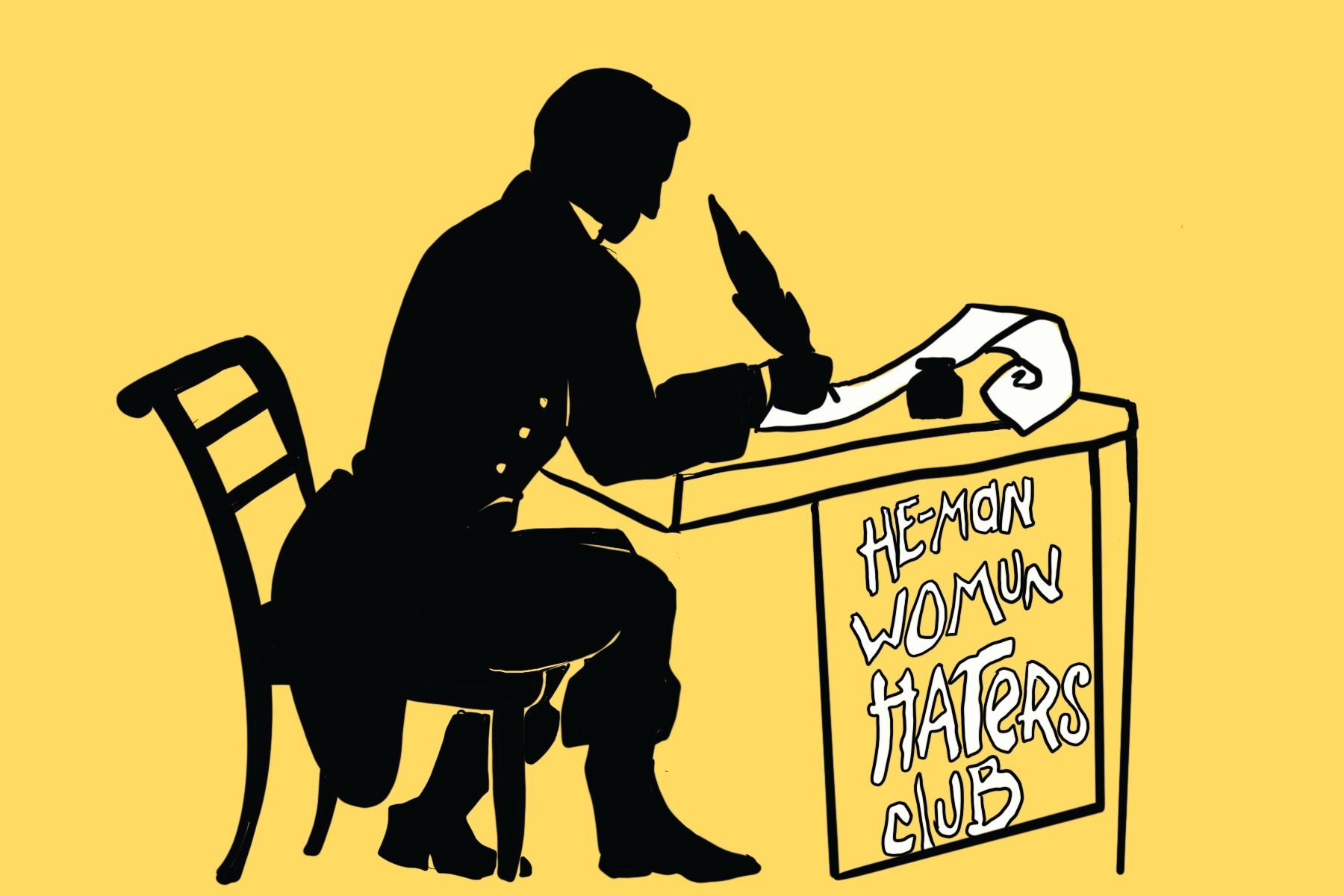
The boldface is mine. I mentioned comedians earlier and I’m holding out for the possibility that Walsh was playing an Andy Kaufman-esque long joke where he’s the heel, because the it is hilarious if read ironically. That’s an unlikely possibility, though. The preface is a proto-Incel Manifesto. Poor William can’t get a date. His buddy Pope should have taken him aside: “Maybe it’s you.”
Quiller-Couch may well have looked over the Walsh oeuvre, seen titles like “Against Marriage,” “To His False Mistress,” and “Upon Quitting His Mistress” spotted a theme, figured lots have “Rivals” in them, this one’s called “Rivals,” and one is the same as the rest so it might as well stand as synecdoche for the whole. “Look at all the printing costs I’ve saved Oxford Press by not letting Walsh repeat himself for pages on end.” That would have been a fine act of editing.
I’ll leave with a last screed from the broken-hearted, this time aimed at poor Celinda. Did any of these women know he existed?
Upon the same Occasion
What Fury does disturb my Rest?
What Hell is this within my Breast?
Now I abhorr, and now I love;
And each an equal Torment prove.
I see Celinda’s Cruelty,
I see she loves all Men but me;
I see her Falshood, see her Pride,
I see ten thousand Faults beside;
I see she sticks at nought that’s ill;
Yet, oh ye Powers! I love her still,
Others on Precipices run,
Which, blind with Love, they cannot shun.
I see my Danger, see my Ruine,
Yet seek, yet court my own undoing:
And each new Reason I explore
To hate her makes me love her more.
[This entry is cross posted at ordinary-times.com]