

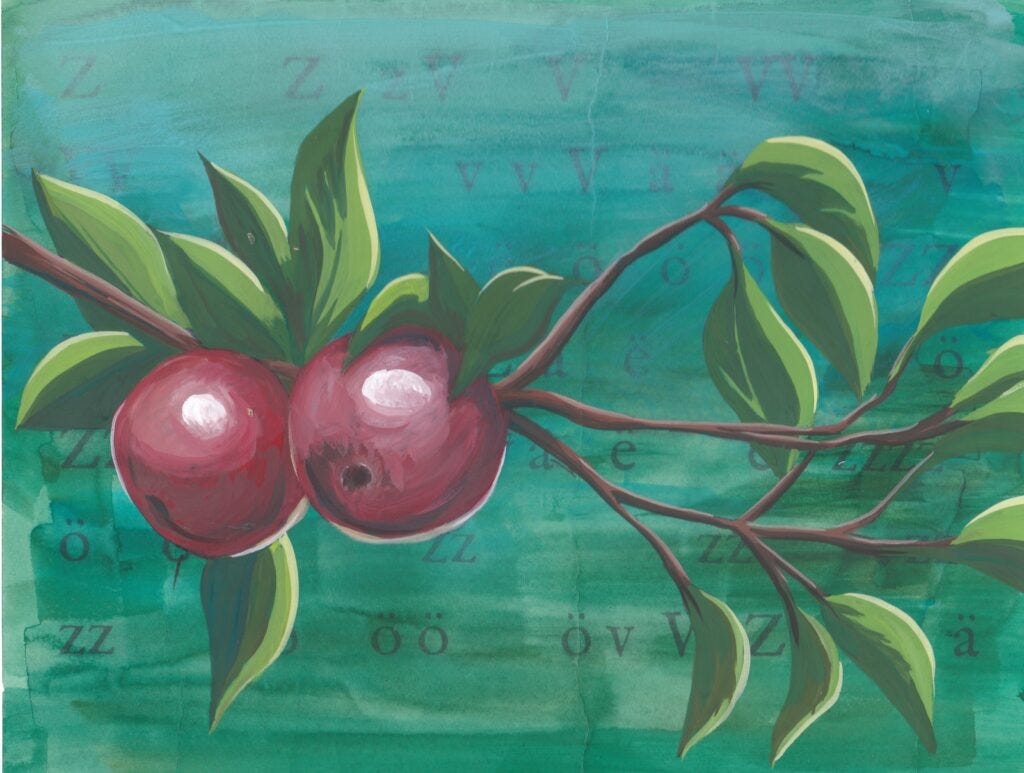
You’re still at work? What do you think you’re getting done between now and quitting time? Cut out and stop pretending. Take a POETS Day. Piss Off Early, Tomorrow’s Saturday.
First, a little verse.
***
When last we saw the name Coventry Patmore in this space, he was getting inappropriate with a married and unreceptive Alice Meynell. There’s a Walter Stoneman photo of Alice’s mister, Wilfrid Meynell (rhymes with “fennel”), taken circa 1916, putting Wilfrid circa sixty-four years old. He’s a pretty robust looking sixty-four. Contrast that with an 1894 John Singer Sargent portrait of seventy-one year old Coventry Patmore. Old Coventry looks like Mark Twain on the tail end of a GLP-1 bender.


The most in-depth account of how the Meynells’ handled Patmore’s affections, and there’s between the lines stuff suggesting affections verged on obsession, is that Alice “ended their friendship.” For Patmore’s sake, I hope that’s all there was to it. I know the photo and painting capture the men as older, but regress them and it’s hard to imagine a scenario where Meynell doesn’t put a pasting on slight Patmore.
In any case, I’m glad to run into Patmore again, this time catching him in a good light. He lent volumes of William Barnes poetry to Gerard Manley Hopkins. There’s no pinning down a single influence or spark that sent Hopkins to write so originally. Admiration for Norse and Anglo-Saxon poetry came first. It’s hard not to notice similarities in what Barnes did and what Hopkins would go on to do. I’d throw Barnes’s work in a prominent spot among second tier influences. Everybody likes a redemption story, so remember Patmore as creepy only some of the time and give him credit for fueling Hopkins the rest.
Hopkins’s friend and eventual literary executor, Robert Bridges, wasn’t as much a Barnes fan, but when Hopkins expresses disagreement with him, we get questions. From a letter written by Hopkins to Bridges:
“I hold your contemptuous opinion an unhappy mistake he is a perfect artist and of a most spontaneous inspiration; it is as if Dorset life and Dorset landscape had taken flesh and tongue in the man. I feel the defect or limitation or whatever we are to call it that offended you: he lacks fire, but who is perfect all round? If one defect is fatal what writer could we read?”
Was the “lacks fire” assessment commentary on Barnes’s stylistic decisions? Barnes wrote a great deal in iambic, more often than not tetrameter, but made it pop with frequent hard consonant alliteration in nod towards old Anglo-Saxon tradition. Hopkins used those same alliterative punches, but out of meter and in ways that surprise and enervate, counting stresses with a varying number of unstressed syllables between; “Sprung Rhythm,” as he called it. Did he mean Barnes lacks energy? Maybe in comparison to himself, but certainly not when measured against most others.
Considering Hopkins was a Catholic priest and Barnes an ordained C of E curate, the lack of “fire” may have been a denominational slight. Hopkins famously puts “God’s Grandeur” front and center while Barnes is content to enjoy creation without attribution.
Of course, it could be than Hopkins was being conciliatory towards his friends for tranquility’s sake. In a later letter he writes that Barnes is “a perfect artist and of a most spontaneous inspiration; it is as if Dorset life and Dorset landscape had taken flesh and tongue in the man.” “Perfect” doesn’t “lack,” but context allows for exaggerations and concessions. Maybe he threw in “lack” to throw his friend a bone while presenting a counterargument. What’s certain is that Hopkins was very much impressed.
The first thing a reader notices about Barnes’s poetry is that the bulk is written in dialect, specifically the Dialect of Dorset, his home for most of his life save sallies to Cambridge as a student, a dozen years in nearby Wiltshire as a school master, and a two year stint as curate in Yorkshire. Be ready for a preponderance of Zs where you’d expect to find an S and, as you’ll see later, umlauts tossed about with the discipline of an 80s hair band.
from Zun-zet
William Barnes (1801-1886)Where the western zun, unclouded,
Up above the grey hill-tops,
Did sheen drough ashes, lofty sh’ouded,
On the turf bezide the copse,
In zummer weather,
We together,
Sorrow-slightèn, work-vortgettèn,
Gambol’d wi’ the zun a-zettèn.
He’s not as strict with slack syllables as he could be, certainly not as much as his friend Tennyson and that host of contemporaries were, but it’s recognizable tetrameter, taking the fifth and sixth lines together as a single broken line.
You’ll notice the made up words “sorrow-slightèn” and “work-vortgettèn.” They mean “carefree” and “idle,” respectively. I’m not an agile enough linguist to tell you why he felt the need to insert his own creations in this case, but broadly he felt English should be free of foreign words and so invented compounds to suit. As a “linguistic purist,” he thought borrowed words diluted the language of the English people and he went so far as to advocate purging all Latin and Greek words, no matter how established.
He stated that a pure language is more comprehensible—though he’d probably say “heäd-fitten” instead of “comprehensible”—to the average speaker. Barnes spoke a great many languages. Per Wikipedia, he was fluent in Greek, Latin, French, Hebrew, Hindi, Italian, Russian, Welsh, Cornish, Old English, and, obviously, regular old (not Olde) English with and without the Dorset twang. Compared to him, we’re probably all linguistic simpletons so his claim to want to simplify for the average Joe may be less paternalistic than it was kindness born of astonishment at the limitations of even the tri-lingual around him.
As he was a remarkable poet, it’s possible he didn’t like the cacophony of mixing and matching or he liked the streamlined sound of a single tradition. I like to think he had a bit of OCD and knowing as many languages as he did meant he knew what words belong in what language and he didn’t like them touching, like a kid who freaks when the peas touch the mashed potatoes.
I’m joking about the OCD, but if I weren’t, I’d throw in that Barnes was an authority on grammar to back me up. His 1854 work Philological Grammar was well respected and he was considered an authority on the subject. The excellent anonymous biographers at Poetry Foundation tell me that he tutored a young Thomas Hardy. Hardy went on to work for an architect and at the drafting tables or wherever architects gather, discussion of literature and arts happened. It’s funny to me that Hardy wasn’t Hardy yet, so not an authority himself, but when grammatical or literary questions needed arbitrage, he would pop over to his old tutor’s for certainty.
Tokens
Green mwold on zummer bars do show
That they’ve a-dripp’d in winter wet;
The hoof-worn ring o’ groun’ below
The tree, do tell o’ storms or het;
The trees in rank along a ledge
Do show where woonce did bloom a hedge;
An’ where the vurrow-marks do stripe
The down, the wheat woonce rustled ripe.
Each mark ov things a-gone vrom view—
To eyezight’s woone, to soulzight two.The grass ageän the mwoldrèn door
‘S a tóken sad o’vo’k a-gone,
An’ where the house, bwoth wall an’ vloor,
‘S a-lost, the well mid linger on.
What tokens, then, could Meäry gi’e
That she’d a-liv’d, an’ liv’d vor me,
But things a-done vor thought an’ view?
Good things that nwone ageän can do,
An’ every work her love ha’ wrought
To eyezights’s woone, but two to thought.
His most famous poem is probably “My Orcha’d in Lindèn Lea.” It was originally published as “My Orchet in Linden Lea” but changed, both title and a couple of minor spellings in the body, for the second edition. It’s my understanding that the second, as printed below, is the more common version.
The identical line ending each stanza provides a great example of a poetic device borrowed from Welsh and adjacent poetics called cynghanedd (pronounced kung-ha-neth) or cynghanedd groes, and meaning, more or less, “cross harmony” in English. It’s built around a caesura, in the middle of the line. I’m used to seeing a comma or semicolon announcing the pause, but there doesn’t have to be one.
The line “Do leän down low in Linden Lea,” breaks naturally between the fourth and fifth of eight syllables. The words in the first half, or hemistich, run consonants in the order D-L-N-D-N-L. In the second, the run N-L-N-D-N-L. Only the first consonants, D and N respectively, differ.
So,
Do LeäN DowN Low / iN LiNDeN Lea
I’d not read about the device before. It’s one to look out for. I’m sure we’ve all read over a use of it and noted viscerally, at least, the pleasant sound of the arrangement without spotting the structure.
Without further ado,
My Orcha’d in Lindèn Lea
‘Ithin the woodlands, flow’ry gleäded,
By the woak tree’s mossy moot,
The sheenèn grass-bleädes, timber sheäded,
Now do quiver under voot;
An’ birds do whissle auver head,
An’ water’s bubblèn in its bed,
An’ there vor me the apple tree
Do leän down low in Linden Lea.When leaves that leätley wer a-springèn
Now do feäde ‘ithin the copse,
An’ païnted birds do hush their zingèn
Up upon the timber’s tops;
An’ brown-leav’d fruit’s a-turnèn red,
In cloudless zunsheen, auver head,
Wi’ fruit vor me, the apple tree
Do leän down low in Linden Lea.Let other vo’k meäke money vaster
In the aïr o’ dark-room’d towns,
I don’t dread a peevish meäster;
Though noo man do heed my frowns,
I be free to goo abrode,
Or teäke ageän my hwomeward road
To where, vor me, the apple tree
Do leän down low in Linden Lea.
[This entry is cross posted at ordinary-times.com]